
This article has not been professionally reviewed by a dive-medicine specialist or instructor. It is general information and does not replace dive training, professional advice or medical diagnosis. Stop diving and seek immediate medical help for serious or unusual symptoms after a dive.
Ordinary breathing air is not pure oxygen
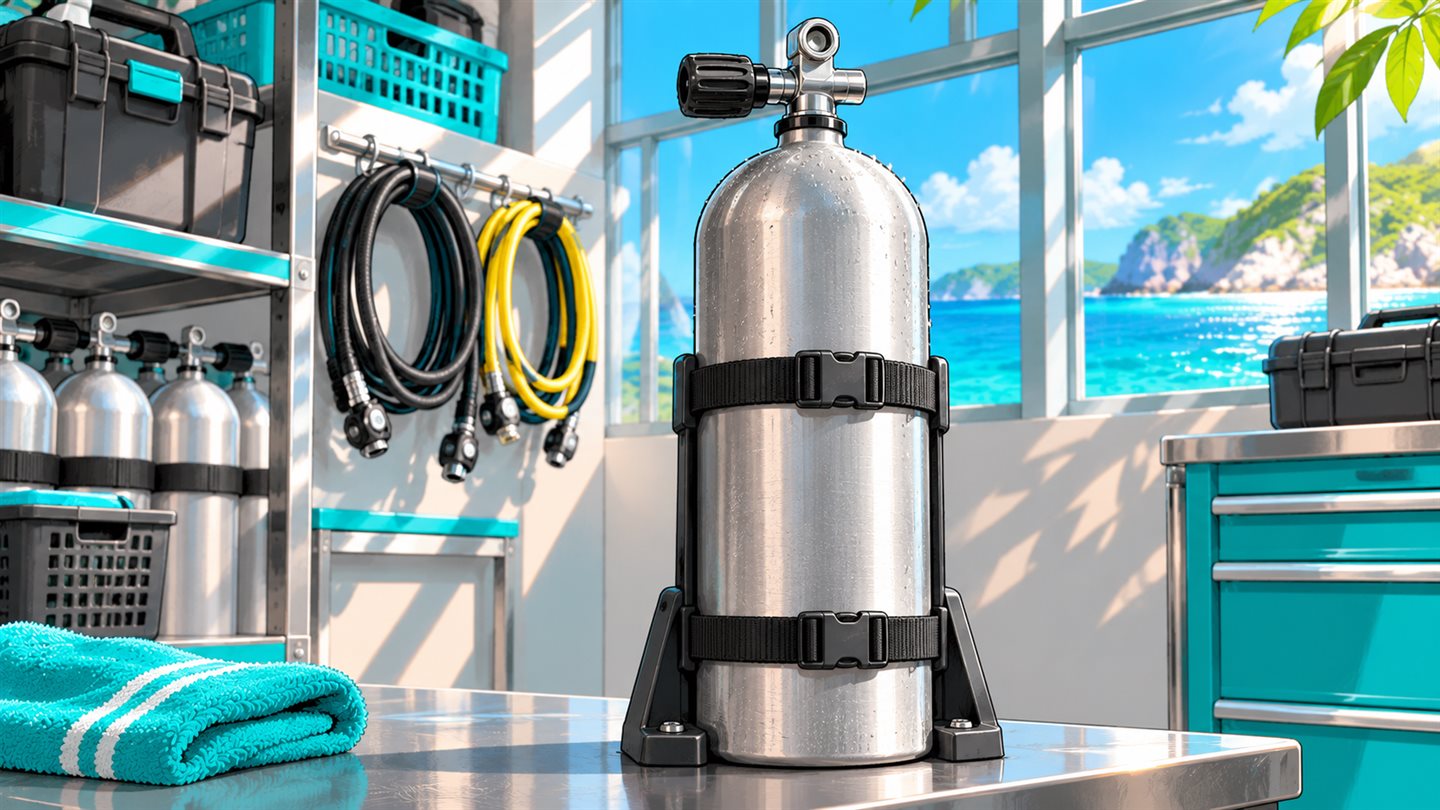
A scuba cylinder is sometimes casually called an oxygen tank, but recreational divers commonly use appropriately prepared compressed air, which contains mainly nitrogen and oxygen. Its contents cannot be identified safely from appearance alone.
Other breathing gases exist
Divers with relevant training may use enriched air nitrox or other mixes. Each has specific requirements and limits; a higher oxygen percentage is not automatically suitable for every depth or dive.
Filling, marking and verification
Use a qualified gas-filling service. Follow your training, equipment requirements and applicable rules for marking, analysis and use. Do not attempt gas blending or high-pressure work yourself.
Interested in nitrox?
Ask a qualified instructor about a dedicated course covering analysis, depth limits and planning. This introduction is not a substitute for gas-use training.
Sources
This article is for general information and learning only. It is not medical advice or a substitute for dive training. Follow your training and the guidance of qualified professionals, taking actual conditions into account.