
This article has not been professionally reviewed by a dive-medicine specialist or instructor. It is general information and does not replace dive training, professional advice or medical diagnosis. Stop diving and seek immediate medical help for serious or unusual symptoms after a dive.
Why inspect?
A cylinder holds high-pressure gas. Use, handling, corrosion and storage can affect condition. DAN recommends attention to periodic inspection and maintenance; do not continue using a suspect cylinder.
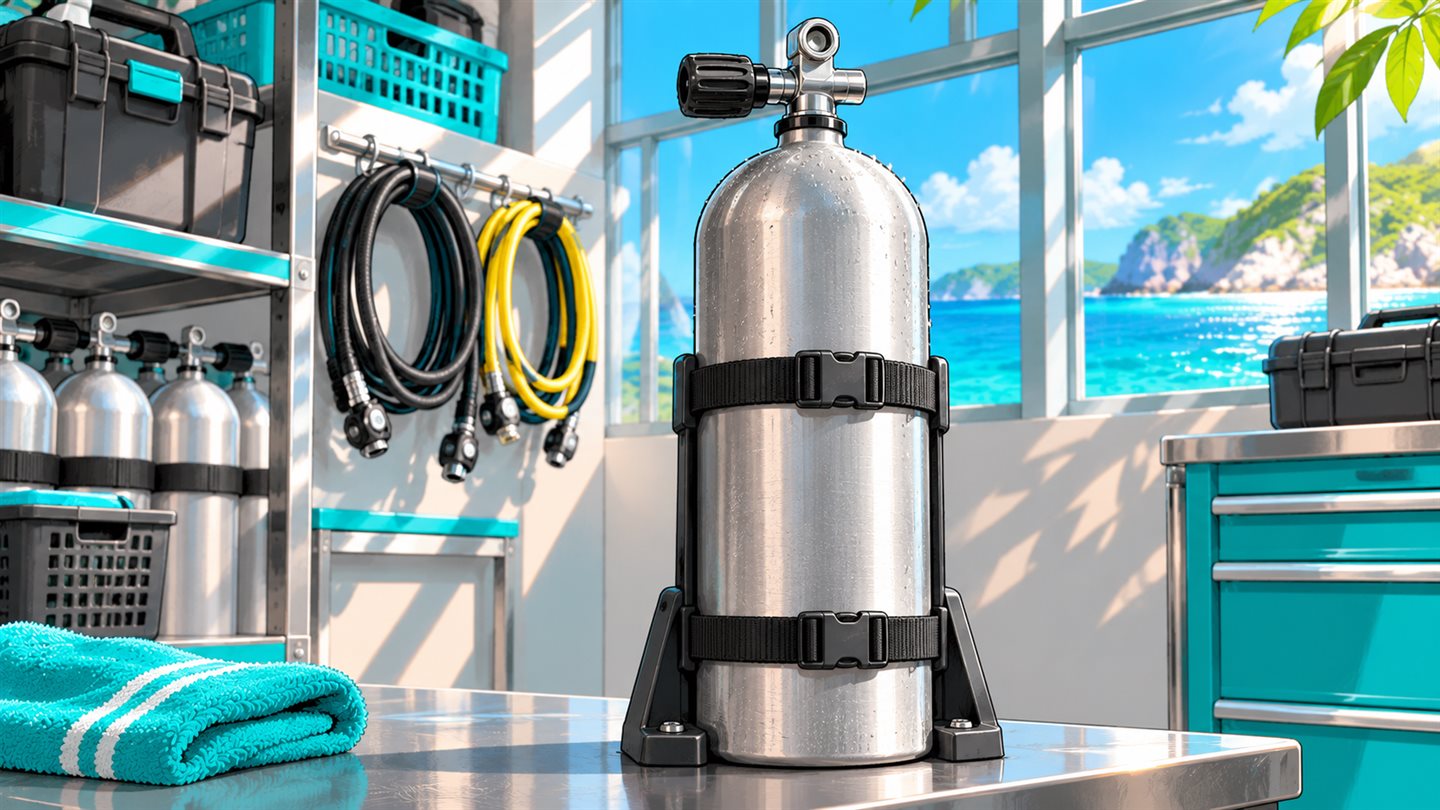
What records to check
Ask a qualified inspection facility how to read cylinder markings, inspection dates, certificates and service records. For used cylinders, ask about use and storage history too.
Do not treat overseas intervals as Hong Kong law
Requirements in the United States, United Kingdom or South Africa may differ. Applicable Hong Kong requirements depend on the cylinder’s use, design standard and competent authority; this article does not claim a universal statutory interval.
Use qualified service
Internal inspection, testing and valve service belong with qualified facilities or technicians. Do not disassemble, fill or repair high-pressure parts yourself.
Sources
This article is for general information and learning only. It is not medical advice or a substitute for dive training. Follow your training and the guidance of qualified professionals, taking actual conditions into account.