This article has not been professionally reviewed by a dive-medicine specialist or instructor. It is general information and does not replace dive training, professional advice or medical diagnosis. Stop diving and seek immediate medical help for serious or unusual symptoms after a dive.
Colour and styling are easy to notice, but fit, comfort and intended use deserve attention first. Skirts, nose pockets and frames differ between brands and models; no single mask fits everyone.
Start with the intended activity
A scuba mask needs a lens and construction suitable for diving, as well as a skirt enclosing the nose so a trained diver can equalise the mask’s air space. Swimming goggles and some snorkelling masks may not be suitable for scuba. Ask the brand or a specialist about a model’s intended use and specifications.
Pay attention to comfort when trying it on
The skirt should sit comfortably without obvious pressure on the bridge of the nose, forehead or cheekbones. Ask shop staff for help and compare several designs. Do not use an overtight strap to compensate for poor fit.
Consider vision and skirt colour
Some people enjoy the brightness of a clear skirt; others prefer a darker skirt to reduce light entering from the side. If you need vision correction, ask about prescription lenses or inserts: compatibility varies by model.
Care after use
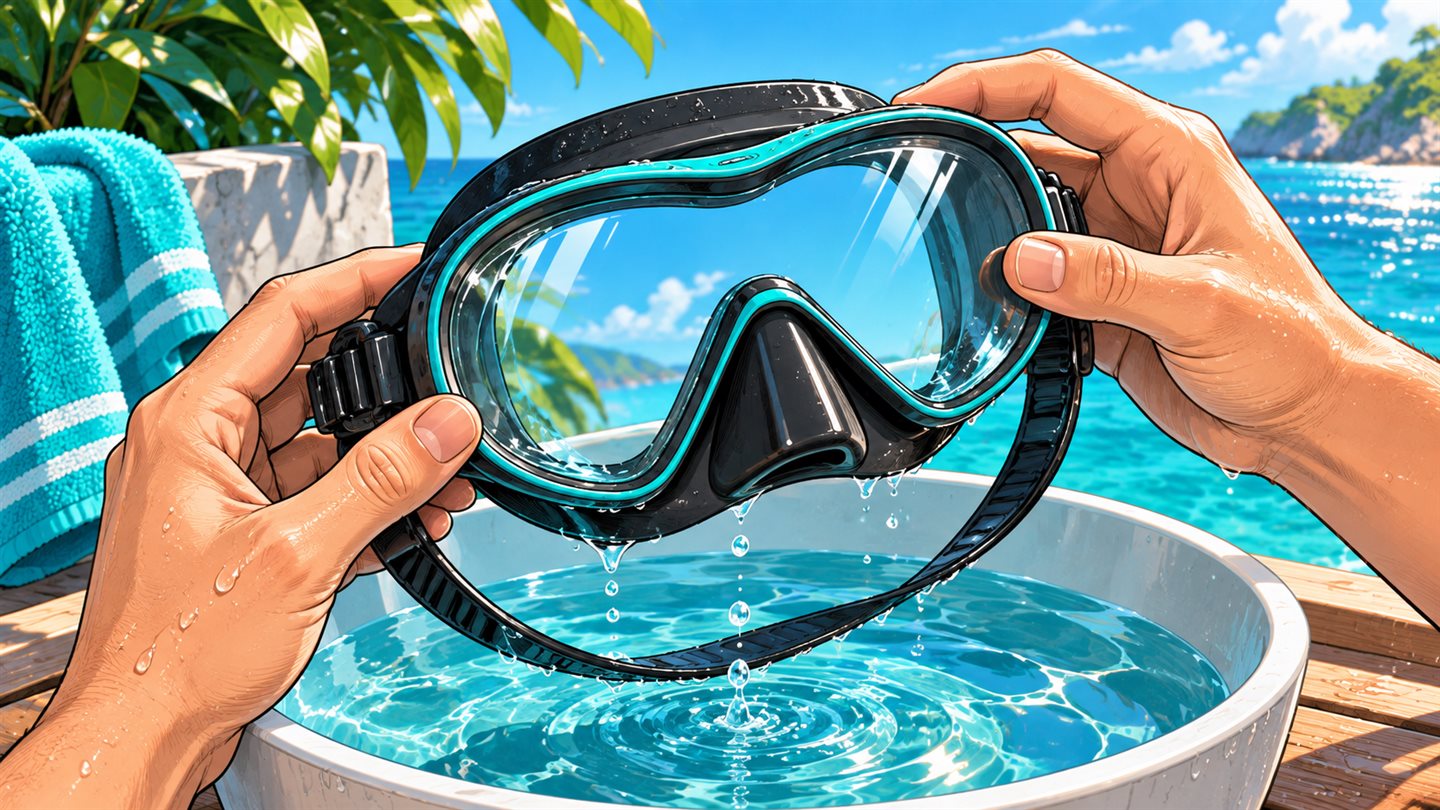
Follow the manufacturer’s instructions, rinse with fresh water, dry thoroughly and store where the mask is protected from pressure and impact. Lens preparation varies with material and coating, so check with the manufacturer before trying a method found online.
Sources
This article is for general information and learning only. It is not medical advice or a substitute for dive training. Follow your training and the guidance of qualified professionals, taking actual conditions into account.