
This article has not been professionally reviewed by a dive-medicine specialist or instructor. It is general information and does not replace dive training, professional advice or medical diagnosis. Stop diving and seek immediate medical help for serious or unusual symptoms after a dive.
Begin with your needs
Capacity, working pressure, material, valve and inspection status all matter. Ask a qualified fill station or equipment professional about the gas supply and rules relevant to your diving before buying.
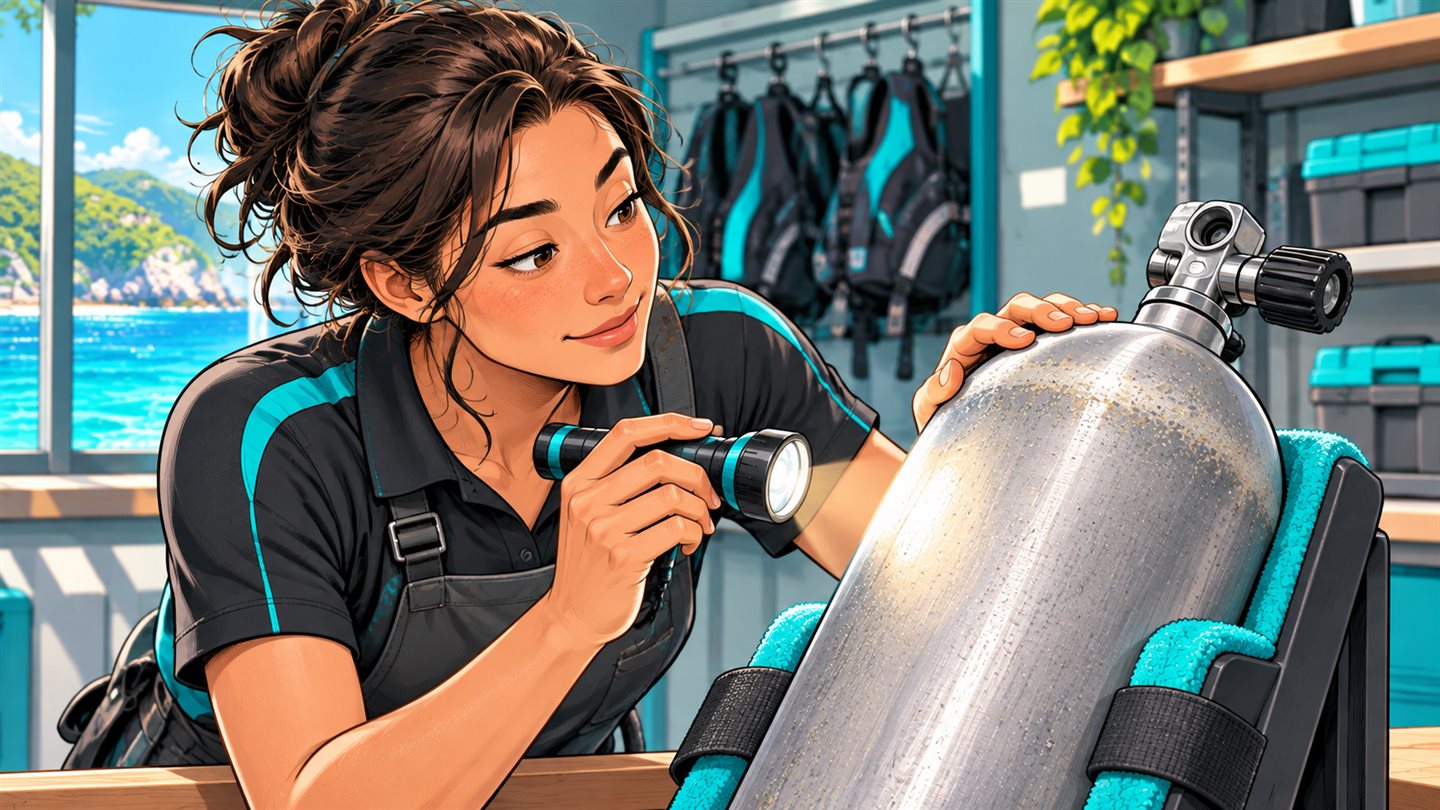
Steel and aluminium
Steel and aluminium cylinders can differ in weight, buoyancy and care. Model, size and remaining gas also affect buoyancy. Reassess weighting under your training when changing cylinders rather than borrowing another diver’s numbers.
Valves and records
Confirm that the valve connection and pressure rating are compatible with your regulator. Check cylinder markings, inspection dates and records; requirements vary by location and equipment.
Buying used
Ask about service, inspection, use and storage history and look for signs of damage or corrosion. If in doubt, consult a qualified inspection facility; do not work on high-pressure components yourself.
Sources
This article is for general information and learning only. It is not medical advice or a substitute for dive training. Follow your training and the guidance of qualified professionals, taking actual conditions into account.